
MOVA Robotic Lawn Mower: From New Entrant to the Next Phase of Competition in the Smart Garden
Click:
Time:2026-01-06 16:29:12
In early spring 2025, the MOVA robotic lawn mower officially launched in key sales channels. Within just six months, its cumulative sales surpassed 100,000 units, a pace rarely seen among similar new entrants. In contrast, established industry players, including Husqvarna, Powerworks (Positec), and Segway, primarily adopted a 'volume-grabbing strategy' involving multiple brands and models operating in parallel. MOVA's growth trajectory has evidently introduced a new variable to the market.

During the initial product launch phase, MOVA swiftly completed its channel deployment, prioritizing entry into core European retail chains like BAUHAUS and OBI. It simultaneously built localized operational and after-sales support capabilities, laying the foundation for large-scale sales.
The European market became the core engine for MOVA's growth. On online channels in France, Italy, and others, MOVA products repeatedly entered Best Seller lists. Even in highly demanding markets like Germany, which place a premium on product stability, MOVA gained positive user feedback based on the user experience. In the second quarter alone, monthly sales in Germany exceeded 3,000 units. During the French Days sales event in France, sales of the MOVA robotic mower on the Amazon channel also surpassed 1,000 units, validating the product's acceptance in high-standard markets. During the Black Friday period in Southwestern Europe, the MOVA 1000 model secured the second position in its category sales ranking.
This growth was not solely reliant on price incentives. From the outset, the MOVA team clearly judged that in mature markets like Europe and the US, a low-price strategy is difficult to sustain long-term, as users place greater value on 'whether it truly saves effort and worry.' Consequently, 'ready-to-use, stable and reliable, with clearly perceptible smart features' became the core logic guiding product design and market communication.
From an industry perspective, the market space continues to expand rapidly. According to data from institutions like Grand View Research, the global smart robotic lawn mower market was valued at approximately $1.5–2.5 billion in 2023 and is projected to grow to $6–10 billion by 2030, with a compound annual growth rate (CAGR) of 12%–20% over the next 5–10 years.
Currently, the penetration rate of smart robotic mowers in the global lawn care equipment market remains below 2%. If they achieve large-scale substitution of traditional equipment in the future, the penetration rate could potentially rise to 17%, corresponding to a potential market size exceeding 300 billion RMB (approximately $41 billion).
Regarding its technological path, MOVA did not adopt the mainstream vision-only or RTK (Real-Time Kinematic) solutions. Instead, it introduced automotive-grade LiDAR (Light Detection and Ranging) in its first product—a path with higher costs but offering greater precision and stability.
Traditional boundary-based robotic mowers commonly use buried wire solutions, which are not only complex to install but also require additional professional installation fees, typically ranging from €150 to €300. If the garden layout changes, the boundary wires often need to be re-laid. Furthermore, most manufacturers differentiate their SKUs through strict area tiers (e.g., 500㎡, 800㎡, 1000㎡), limiting flexibility.
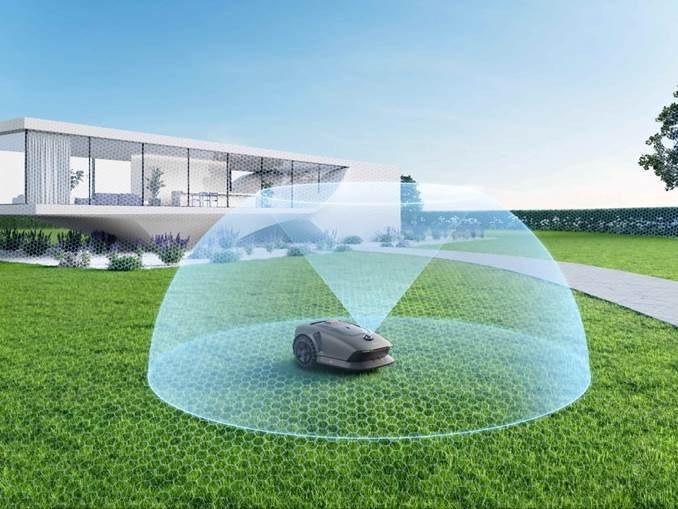
The introduction of LiDAR enables MOVA to offer a boundary-free mowing experience. Its main models, the MOVA 600 and MOVA 1000 series, are equipped with the self-developed UltraView™ Environmental Perception System. This system can construct high-precision 3D environmental maps and perform path planning, not only improving mowing efficiency but also significantly reducing missed spots and overlapping coverage.
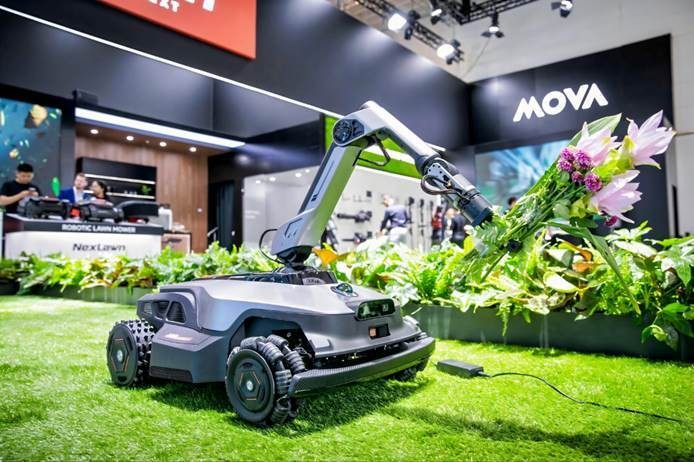
The application of LiDAR enhances the overall environmental perception capability of the machine by approximately 60% compared to most competitors. It maintains stable positioning and efficient operation even in complex garden scenarios. Third-party tests show that a MOVA robotic mower takes only about 5-10 minutes to complete mapping of a 1,000㎡ area, with its 3D LiDAR achieving centimeter-level positioning accuracy.
The smart robotic lawn mower industry is entering the true 'next phase.' The advantage will no longer come from low-cost replication, but from the continuous refinement of technological depth, product stability, and user experience.
For MOVA, selling 100,000 units in six months is not the finish line, but rather the starting point for entering the core competitive arena. In the long-term race of the smart garden, if Chinese hardware companies wish to gain genuine influence, they must break away from homogeneous price competition. Only by consistently investing in R&D and scenario innovation can they build enduring competitive barriers.

Copyright © 2025 MySite Ltd. All Rights Reserved.

 Email
Email